We begin today to pray for Bishop Strickland. In his humility and obedience, he leaves his position as Bishop of Tyler.
We also pray for all the bishops of the United States as they gather on November 13 – 17, 2023 at the USCCB Plenary Assembly.
The Catholic Faithful in Tyler Texas have been doing Novenas for Bishop Strickland regularly for the last couple of years. Join us from wherever you are to pray for America’s Bishop!
SIGN UP BELOW TO RECEIVE DAILY NOVENA REMINDERS
Day 1
November 13th
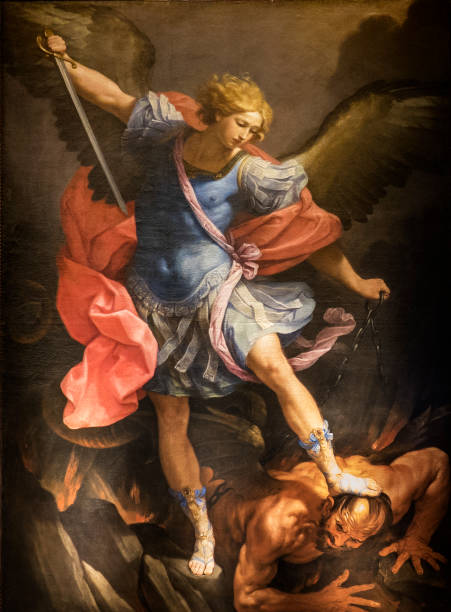
Novena to St. Michael the Archangel
In the name of the Father, and of the Son, and of the Holy Spirit. Amen.
St. Michael the Archangel, I honor you as a powerful protector of the Church and guardian of my soul. Inspire me with your humility, courage and strength that I may reject sin and perfect my love for our Heavenly Father.
In your strength and humility, slay the evil and pride in my heart so that nothing will keep me from God.
St. Michael the Archangel, pray that I may be blessed by God with the zeal to live my life in accordance with Christ’s teachings.
St. Michael the Archangel, you are the prince of angels but in your humility you recognized that God is God and you are but His servant. Unlike satan, you were not overcome with pride but were steadfast in humility. Pray that I will have this same humility.
It is in the spirit of that humility that I ask for your intercession for Bishop Joseph Strickland. I pray for you to accompany and protect him as he lives out the mission given to him by God and the Church.
May Bishop be surrounded by all the Holy Angels. May they tend to him during this time of great loss. May they inspire, protect and strengthen him as he finds his way without his beloved Diocese of Tyler.
I pray for our Blessed Mother to comfort Bishop in this time of uncertainty. May she continue to assist him as he seeks the Will of God and continues to defend the true faith.
May a fire of love burn in the hearts of all the bishops of our country. May their hearts be ignited by the Holy Spirit and purified. May they be consumed with a burning desire to live only for Christ and fulfill their God given Apostolic mission.
May the bishops of our country be given the same courage as the first apostles were given; a willingness to lose everything for love of Jesus. May they even be willing to lose their lives to defend the Truth as handed down to them through the ages.
(Add your own intentions)
With grateful hearts, we thank you St Michael.
“Saint Michael the Archangel, defend us in battle, be our protection against the wickedness and snares of the devil. May God rebuke him, we humbly pray; and do thou, O Prince of the Heavenly host, by the power of God, cast into hell satan and all the evil spirits who prowl about the world seeking the ruin of souls.”
Amen.
Immaculate Heart of Mary, pray for us.
Sacred Heart of Jesus, have mercy on us. Sacred heart of Jesus, have mercy on us. Sacred Heart of Jesus, have mercy on us.
In the name of the Father, and of the Son, and of the Holy Spirit
Reminders by Text:
We have created a group on Signal to send reminders by text. You must have the Signal App to receive these reminders. Follow the link(s) below to select this option.
Why is the Civil War the most interesting period in American history? Why has a book like Gone With The Wind been translated into dozens of languages around the world (including Korean, where it comes already loaded onto new tablets)? Why are Civil War battles re-created all over the country, with re-enactors investing thousands of dollars in their kit? Why do millions of tourists visit Gettysburg, and why is that battlefield featured in movies like Remember the Titans as a turning point in the lives of those who come?
The Civil War is ours, for one thing. We didn’t fight it in Europe or the Pacific, but in Richmond and Atlanta and around Washington DC; New Orleans, Baltimore and Nashville. It was fought in the towns, woods, swamps, prairies, rivers, churchyards and neighborhoods of America, our homeland.
As a thought exercise, imagine war breaking out in the United States today. It would likely be about personal liberties, the power of the Federal government, the Constitution’s primacy, the berserker sexual activists and traffickers, and abortion. In other words, it might be ignited by any number of issues, but eventually it would come down to the meaning of life, and its protection.
In the 1850s, there were tensions about the rights of states, equity in Congress, sectional tariffs and imports, and slavery. After a few years of war scoured away the details, it became a more single-minded war for the abolition of slavery. One could say that the Civil War came down to the meaning of life, and its protection.
The primary lessons I draw from the War are these: nothing less than the meaning of life is worth a war, as it costs more than one can possibly imagine in peacetime; extraordinary leadership is required to make effective the sacrifices of soldiers; and moral authority is absolutely necessary to prevail over a stronger enemy.
The Cost
In the 1850s, Americans weren’t thinking, “We’re living in the run-up to a war that will destroy us for generations to come.” There were sectional conflicts, journalists fanning the flames, and speculators eyeing the profit potential of war, like today, but most people were engaged in their daily pursuits, hoping the conflicts could be settled reasonably. Without the agitation of social media, you’d think there’d have been a better chance of peaceful resolution, but whenever influencers manipulate emotions, civil war can be lurking. If the issues concern your livelihood, your family, or your religious convictions, the kindling is dry.
The caning of Charles Sumner on the Senate floor in 1856 is a perfect picture of the descent into chaos. Sumner, a Republican from Massachusetts, had given a violently angry speech in the Senate, lasting two days, calling his enemies things like “drunken spew and vomit.” And then he got nasty. Senator Stephen Douglas remarked quietly, “That damn fool is going to get himself killed by some other damn fool,” and that was nearly the case.
Representative Preston Brooks of South Carolina entered the Senate chamber and issued a sort of a medieval challenge: you’ve slandered my countrymen, and honor demands a reprisal. He then struck Sumner over and over with a gold-tipped cane to the point of unconsciousness. Sumner suffered injuries that lasted for years. Brooks was fined $300, re-elected to his seat, and received canes from appreciative supporters all over the South, which enraged the North possibly more than the actual incident.
It would be several more years before the first shots were fired, but in retrospect, it was clear that the conflict had moved from philosophies to passions, from the oratory to the boxing pit. More and more people were starting to anticipate war, even desire it, as a way to redress grievances that weren’t being otherwise resolved.
Once the shooting started in 1861, the veil was torn. Actual war far exceeded anyone’s expectations of the human cost. In 1861, as the first full battle was shaping up at Bull Run, near Manassas Junction, Virginia, Washington’s elites rode out in buggies with picnic hampers to watch the match. Women with their parasols, men with their cigars, were not expecting to see entrails and severed limbs. It was meant to be an afternoon’s thrilling entertainment, capped off by the spectacle of upstart Rebel soldiers fleeing at first glance of the imposing Federal army. There was a grave awakening that day, as the Rebels stood their ground and fired back rather insistently, causing the buggies to careen back to the city.
It was a nasty surprise to the Southerners, too, though they held the field that day. They had similar illusions of a war easily won against a sissified opponent. In one of the opening scenes of Gone With The Wind, a young man from Georgia boasts, “Everyone knows one Southerner can whip ten Yankees!” That sentiment was widespread, even used to bolster Southern soldiers before battle, according to an eyewitness at Bull Run.
Bold words took a mortal hit in that first battle. There were 4,500 casualties at Bull Run, which shocked both armies and civilians. No one yet realized that future battles would dwarf that, in numbers of killed, wounded and missing men. The horror to come was like a hurricane forming in the Atlantic, spinning ashore with a punch no one expects.
Battle of Antietam, Antietam National Cemetery
Leadership
What kept the war going as long as it did was probably leadership. Both North and South had skilled, courageous, persevering soldiers, but they could not have effectively deployed their strengths without good leadership. You may have citizens itching for war, eager to fight a clear evil, but without fine leadership, that passion can’t be productively mobilized on a grand scale.
Everyone knows the names of great Civil War leaders, even if they don’t know exactly what they did: Robert E. Lee, Stonewall Jackson, Ulysses S. Grant, and William Tecumseh Sherman, in addition to many lesser-knowns who performed magnificently.
The South, with far fewer resources, and a smaller population pool to draw from, nevertheless performed well at the beginning of the war, quite likely due to superior leadership. Thomas “Stonewall” Jackson was a standout from the very first battle, where he gained his nickname from his stern refusal to back down when others fled in confusion.
Robert E. Lee didn’t command an army until a year into the war, but his presence was mightily evident once he did. His unconventional battle plans that triumphed by sheer audacity made him a symbol of canny genius and sober courage. Faith in his leadership kept the Southern armies in the field long after ultimate defeat had become inevitable. Even as he negotiated the surrender at Appomattox Courthouse, his starving, barefoot men pledged to fight on, if he wished it.
The Union armies, in contrast, were plagued by poor leadership in the first few years of the war. President Lincoln initiated five changes of military leadership before giving overall command of the US Armies to General Grant in 1864. Northern soldiers, bitter that their sacrifices in battle kept being undone by the bad decisions of their leaders, were eager to exact retribution from the South. General Sherman’s troops pillaged Georgia and South Carolina, under orders to demoralize and impoverish the civilian South, to cripple their will to fight. Though Grant was called “the Butcher” in the press, for feeding men into battles to overwhelm the enemy with sheer numbers of bodies, he produced victory after victory, proving to be a leader worthy of his men.
Moral Authority
Starting a war is somewhat easy; it takes the sustained inflammation of emotions and an outraged sense of justice, hopelessness, and a perceived threat to one’s family. To carry on a war, though, over a long period of time when the casualty lists grow longer, a people must hold moral authority. You have to know that the cause you’re fighting and suffering for is just, and that God fights with you.
Both sides in the Civil War were initially convinced of God’s favor, but when opposite principles face off, God can only be found on one side, the side of Truth. For the early years of the war, when Northern soldiers were being poorly used by their leaders, their endurance was fortified by the sense of being on the side of right. By the time the war reached the long, sad slugfest of 1864-5, the Union was well convinced of the morality of their cause. While the determination of the South had not flagged, the supernatural power that accompanies God’s overarching will was absent.
The Civil War proved that secession is possible, and even Constitutionally defensible. Secession itself is a non-violent act; it’s like leaving a party when the drinking gets out of hand. But once the Federal government acted to forcibly retrieve the seceding states, they had to build from scratch an army, navy, communication system, currency, constitution and law. States that remained bound to the Federal government had those institutions already in place. With such a disadvantage, a seceding state had best be on the side of Truth.
Given the evil rampaging through the world right now, searing a jagged path straight through marriage and the family, with every sign of accelerating, there will be a fight. Evil does not retreat, unless it is to give its opponents time to grow complacent before the next onslaught. It would be prudent for us to plumb the wisdom that our particularly American Civil War left us, as we contemplate what is to be done. The meaning and protection of life is at stake, and the kindling is dry.
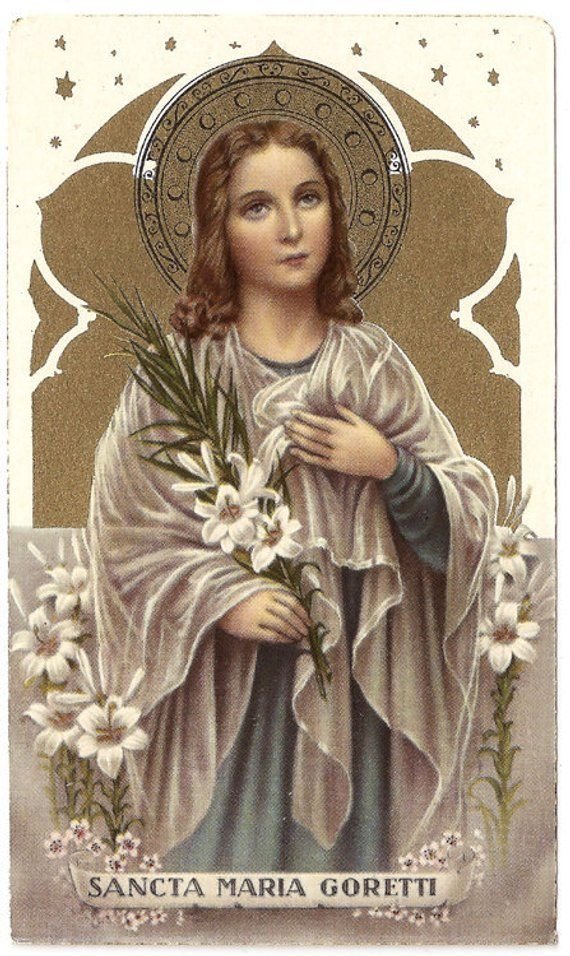
Begins June 28th and ends on July 6th the Feast of St Maria Goretti
The Catholic Faithful of Tyler have been doing Novenas for Bishop Strickland regularly for the last couple of years. Join us for the next Novena!
SIGN UP BELOW TO RECEIVE DAILY NOVENA REMINDERS
Reminders by Text:
We have created a group on Signal to send reminders by text. You must have the Signal App to receive these reminders. Follow the link(s) below to select this option.
St. Maria Goretti, your devotion to God and Mary was so strong that you were able to offer your life rather than lose your virginal purity. Help all of us, beset by so many temptations in this modern world, to imitate your youthful example. Intercede for us all, especially youth, that God may give us the courage and strength we need, to avoid anything that could offend Him or stain our souls. Obtain for us from our Lord victory in temptation, comfort in the sorrows of life and the grace which we sincerely ask of you (personal intentions).
Dear Heavenly Father, we pray for our Bishop, Joseph Strickland. May he always know the guidance of Your great love through the power of Your Most Holy Spirit.
Fill him with the Spirit of Courage to follow Christ and proclaim His truth as found in Scripture and the Catechism of the Catholic Church.
Fill him with the Spirit of Wisdom, that he may in confidence lead his flock through times of confusion, doubt, deception and fear.
Father, bless his apostolic ministry in Your Church. Protect and defend him as he stands in the person of Jesus Christ, offering his life for the sake of Your Holy Church.
We offer our prayer to You Father, and invoke our Blessed Mother’s intercession to Your Beloved Son on behalf of Bishop Joseph Strickland.
May we one day enjoy with you, St Maria Goretti, the everlasting glory of Heaven. Amen.
Our Father…
Hail Mary…
Glory be to the Father…
Sacred Heart of Jesus, be my Love!
Immaculate Heart of Mary, be my salvation!
St. Maria Goretti, Virgin and Martyr, pray for us!
The Cathedral Parish will celebrate the Passover Seder this year on Sunday, April 2 at 6:00 pm.
To participate in the Seder, you must attend the Preparatory Session on Sunday, March 26 at 5:00 pm in the Cathedral Center.
Passover, the longest continually-celebrated feast in human history, begins this year at sunset on April 5, which means it falls one day before Holy Thursday. But in eternal time, Passover is always on Holy Thursday, because they are the same event: the last supper of Jesus was the Passover on Thursday evening, the fourteenth day of Nisan, in 33 AD.
Our parish will celebrate Passover on Sunday, April 2, which is three days early and not at all kosher! But since we’re observing the feast as Christians, we can take liberties.
The date of Passover is governed by the law given in Exodus 12: “Tell all the congregation of Israel that on the tenth day of the month of Nisan, they shall take, every man, a lamb… and they shall keep it until the fourteenth day, when the whole assembly shall kill their lambs in the evening.” The month Nisan is “Abib” in Hebrew, which means “green ears of grain,” an obvious reference to Spring.
So Passover is always on the first full moon of Spring. It had to be a full moon; God would not have sent the whole nation of Israel on a night march with no light. Spring begins at the equinox, March 21, the day on which day and night are equal in duration. After the Equinox, the days get longer… and that is Spring! The first full moon after the Spring Equinox falls on April 5 this year.
Have you wondered why the date of Easter changes from year to year? Easter is set as the first Sunday after the Paschal full moon (Passover). It’s what is called in the Church a “moveable feast” and the dates of those feasts for the coming year are read every year at the Mass of the Epiphany.
The three pilgrim feasts of Israel are each associated with an agricultural season: the barley harvest around Passover; the wheat harvest around Pentecost; and grapes in the fall around the feast of Tabernacles. Yahweh required that the men of Israel should journey to worship at the Jerusalem Temple on those three days.
That’s why Jerusalem was so packed with people on Palm Sunday in 33 AD, when Jesus rode into the city on a donkey; it was the tenth day of Nisan. Jews from all over the world had to be in the Holy City for the pilgrimage feast, to procure a lamb without blemish for the Passover sacrifice four days later, on the fourteenth day of Nisan.
In essence, Passover is the memorial of that miracle by which God saved the people of Israel from bitter slavery in Egypt. He brought them through the ten plagues which struck Egypt, but left Israel unharmed, then led them through the Red Sea on dry land, toward the land that had been promised to their fathers. Miracle upon miracle upon miracle!
Despite the cartoon movies that have been made about the Exodus, the plagues were truly frightful. The food crops of the Egyptians were completely destroyed, their animals covered with boils and infection, the waters of the great Nile river turned to blood, the light of the sun was extinguished, and finally, every Egyptian first-born was found dead in his bed.
Try to imagine the complete contamination of our water, all our wealth destroyed, no food to be had, and the sun withdrawing its warmth and light. Wouldn’t you pretty much agree to anything at that point? But no, Pharoah continues to hoard his power over his slaves, until finally the death of the Egyptian children breaks him down. He practically begs the Israelites to leave his country. But after they’ve left, he changes his mind again and goes after them. It is a drama about evil and its persistence; evil will risk even its own destruction to stay in power.
At churches all over the country this spring, Christians will celebrate the Passover. It has become a popular “living Bible study.” But for Catholics, it has the most poignant meaning because we have been celebrating the Passover our entire Catholic lives, mostly without realizing it.
All our lives, we have heard the “Paschal Mystery” proclaimed: the suffering, death and resurrection of Our Lord Jesus. “Pascha” is Greek for Passover. We’re about to hear that word much more often, throughout the Easter season. In the Sequence on Easter Sunday, we will hear proclaimed, “Christians, to the Paschal Victim offer your thankful praises!” The Alleluia verse will be, “Christ, our Paschal Lamb has been sacrificed.” All the Easter prefaces will refer to “Christ, our Passover.” He is the Paschal lamb, the Passover sacrifice.
And so to learn more about Passover is to enter more deeply, more consciously into the Passover sacrifice of Jesus that we celebrate at every Mass.
When Catholics encounter the Jewish celebration of Passover for the first time, there are flashes of recognition, gasps of wonder. Because what Yahweh commanded to Moses 3000 years ago is what we say and do at every Mass.
It’s like discovering ancestral stories that give you a clue about how you came to be the way you are. My grandmother grew up at switching stations on the Santa Fe railway, and now my heart goes thump whenever I hear a train whistle. My grandfather was Irish, and the sound of Celtic flutes makes me cry.
When Catholics celebrate the ancient Passover rite, with words and actions that are part of the fabric of us, we are suddenly whooshed into the 3000-year river of salvation history. We encounter the proof of God’s eternal plan, set into motion in antiquity, still alive today.
As the Cathedral Parish celebrates Passover this year, watch and listen for all the prayers and gestures that you are so familiar with.
In the Old Testament, God is very particular about the way in which He desires to be worshipped. He is very specific. The lamb must be a year-old male, spotless, with no broken bones. The bread must have no leavening agents. The herbs must be bitter. The celebrants must tuck up their tunics, and be ready to travel.
And the blood of the spotless lamb must be sprinkled on the doorposts of the houses of Israel. Skepticism or disregard of this command resulted in the death of the oldest child of the household, and even the first-born of the animals. There were no innovations, no nods to the spirit of the times. The people must do precisely as God commanded.
It’s part of God’s divine pedagogy, that is, His way of teaching. His ways are incomprehensibly glorious; we can’t understand them at first glance. So God has to prepare His people to receive His plan.
All the steps God took with Israel were “teaching moments,” no matter how bizarre they seemed. The unbelievable command for Abraham to slaughter his long-awaited, only beloved son? It was a teaching on the radical nature of the sacrifice that would be required to save us. That strange and not-so-appetizing manna that fed the Israelites in the desert? Preparation for the day that Jesus would tell his disciples they had to eat His flesh to have eternal life.
You could practically trace the whole story of salvation through bread. Melchizedek, the primordial priest, brought out bread and wine to bless Abram, the chosen of God and patriarch of Israel. When God issued His precise commands for the building of the temple, He commanded that “the bread of the face” must be before the Holy of Holies at all times. The Savior was born in Bethlehem, the “house of bread” in Hebrew; Jesus multiplied bread for the crowds following Him. He delivered a difficult-to-swallow teaching on the bread of life, and He blessed the bread of the Passover to show exactly what He meant by those words.
An even richer history could be taken through the figure of the lamb, from Abraham’s substitutionary sacrifice, to the daily sacrifice at the Jerusalem Temple, and the entire symbolism of the Lamb of God, the Lamb that was slain but not dead, who appears at the Throne of God in Heaven.
And consider wine: commanded by God for the joyful feast days, Jesus’ miraculous changing of water to wine at the beginning of his ministry, the four cups at wine at the Passover supper, the chalice of the New Covenant consecrated by Jesus.
Passover brings all those threads, bread, wine and the lamb, together in one grand event, commanded by God as an everlasting ordinance. The long millennia of celebrating Passover was the key that allowed the apostles to, finally, understand Jesus’s enigmatic words about eating His flesh and drinking His blood.
Passover plays the central role in God’s divine schooling, preparing us for the sacrifice of the Eucharist. At every seminal moment in Israel’s history, the Passover was front and center. The original Passover was the evening before Israel was delivered from slavery. When Israel finally entered the holy land, they celebrated Passover. When the exiles returned from Babylon to rebuild the temple in Jerusalem, they celebrated Passover. When Jesus remained behind in Jerusalem for three days, to the consternation of his parents, it was Passover. When He multiplied the bread, it was Passover. Passover is the key.
The central place of the Passover in the life of Israel has flowered into the central place of the Mass in the life of the new Israel. So much preparation, so many millennia of teaching, all so that we would understand Jesus’ gift to us at the last Passover of his earthly life. God has been preparing us for the moment of Communion for thousands of years. Passover is that preparation.
This year, make your Holy Week unforgettable with the Passover Seder.
Join us this year on Sunday March 26 at 5:00 for the preparatory session and on Palm Sunday, April 2 at 6:00 pm for the celebration.
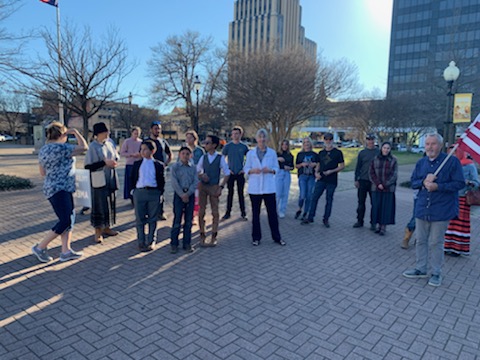
A group of us have been praying the Holy Rosary every week on the Square in Downtown Tyler. We gather as Mary’s Army to fight evil and seek the Triumph of the Immaculate Heart! We pray the rosary for our county, community, and Church. We pray for all souls to know the true love of our Savior Jesus Christ!
To document this year in history and our dedication to prayer, our dear friend Sheryl has created this video. Enjoy the show!
To learn more about Prayer on the Square, Click Here!
Truth for Souls wishes you a Happy Christmas! May you and your family be blessed by the Virgin Mary, Mother of God and by her beautiful child, Jesus Christ!
Here is a touching video for you from St. Joseph’s Battalion. Enjoy!
Join us, the faithful sheepfold of the Diocese of Tyler, and become a Prayer Warrior for our Good Shepherd. Let’s unite to pray, from wherever you call home, in or outside the Diocese of Tyler, and show our love and support for his Excellency Bishop Joseph E. Strickland, Bishop for the World!
Beginning on Tuesday, November 29th & Ending on December 7th
Novena to the Immaculate Conception
During the nine days of prayer, you are invited to make a Holy Hour for Bishop Strickland at the Chapel of Sts. Peter & Paul or wherever you can adore Jesus in the Eucharist. The intentions of Bishop Strickland’s Novena will be submitted at the tomb of Venerable Fulton J. Sheen at the Cathedral of Saint Mary of the Immaculate Conception in Peoria, Illinois.
SIGN UP TO BELOW TO RECEIVE DAILY NOVENA REMINDERS
Reminders by Text:
We have created a group on Signal to send reminders by text. You must have the Signal App to receive these reminders. Follow the link(s) below to select this option.
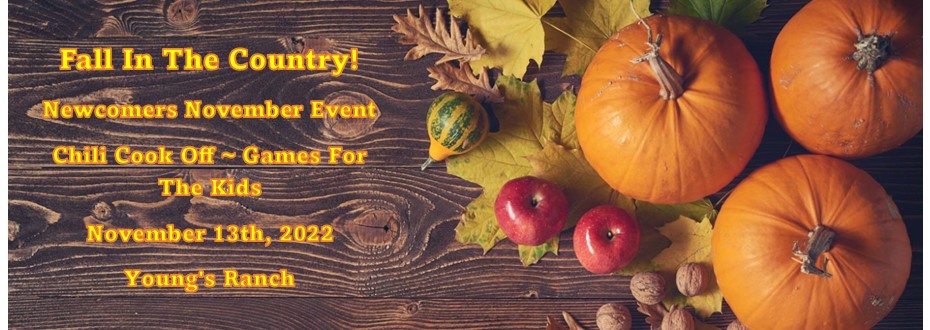
We will have our November Newcomers event at the Young’s beautiful ranch. Everyone is welcome. Newcomers and those who have led the way! Come enjoy a day in the country with family and make some new friends.
Enjoy fishing at the lake, playing games on the lawn or taking a hike around the property. Kids can enjoy bobbing for apples and we will have a big bonfire in the evening!
First Annual Chili Cook Off!
Bring your best and compete for the Title: Chili Champion!
Only 5 Entries will be allowed so register now if you want to participate.
Make your chili at home and bring enough for 20 cups!
Sunday, November 13, 2022
Starting at 2pm until after the sun goes down!
Location: Lindale TX ~ Address will be provided to those who register.
What to bring:
Camp chairs
Beverages to share
Dish to share
Musical instrument if you play
If you have kids (or just want to act like one) a couple of apples for bobbing
Homesteading skills are pure gold, allowing us to live more independently and closer to the land, but these skills are no longer being passed from parent to child. If we don’t make the effort to reclaim them now, we might become the first generation of Americans who don’t know how to bring in a crop, dress and prepare game for dinner, and preserve summer’s bounty for the winter.
Join us in recovering some of these simple living practices. CORAC (Corps of Renewal and Charity) will present a Field Day of homesteading skills and inspiration on Saturday, November 5 from 8:00 am to 8:00 pm.
The day will include keynote speakers Charlie Johnston, founder of CORAC, and Mother Miriam of the Lamb of God, as well as experts in the areas of radio, fish and game, gardening, food preservation, water sourcing, foraging, raising poultry, home defense and more. There will be demonstrations and availability of experts for questions.
THIS WILL BE A WORKING DAY, WITH MANY DEMOS AND LIVE INSTRUCTION.
Event goes on, rain or shine. All talks and demos will be outside, under tents. The ground is unpaved so wear appropriate footwear. Since preparedness is the objective, you will be practicing self-sufficiency by bringing your own chair, refillable water bottle, snacks and layered clothing. Lunch and dinner will be provided, but anyone with dietary concerns should consider brown-bagging. Mass will be celebrated during the day.
Location is a family farm in Lindale, TX. Specific address and further details, as well as a schedule of presentations, will be sent to registrants by October 23.
Registration is $20 for CORAC members, $30 for non-members and $40 for all registrants after October 20. We respectfully request that you not bring children under the age of 12. It’s going to be a long day, and there are hazards for children on the property. Children over age 12 register at the same price as adults.
If you’re not yet a CORAC member, consider joining. There are many benefits, and it costs nothing but your goodwill and readiness to embrace the mission of acknowledging God, taking the next right step and being a sign of hope to others. Read more about CORAC membership here: https://truthforsouls.com/2022/06/10/what-is-corac/ or visit the CORAC website at: https://corac.co
Registration for Field Day is open to all, whether or not a member of CORAC, but we’d love to have you join us. In any storm, the stronger the community, the better.
Sheryl Collmer is the regional coordinator for CORAC East Texas. You can reach her at: sherylc@coracusa.com.
With the debut of daily and Sunday Masses at Veritatis Splendor, the idealistic community up in Winona has sprung back onto the radar screens of east Texas Catholics. For a while, people wondered if the intentional Catholic community would die a quiet death from having bitten off too big a bite. Neighborhoods, schools, recreational facilities, a High Italian Gothic-style church… I mean, really! Somewhere north of nowhere?
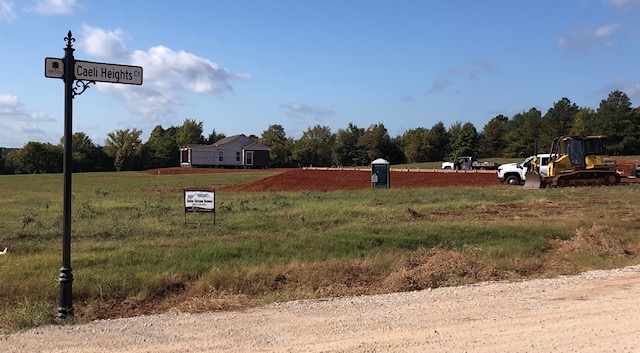
But a steady tide of building activity has been going on all year, and there are some days that the property looks like a giant anthill, trucks and flatbeds plying back and forth as pipe is laid, foundations poured and building materials delivered. Infrastructure to support the first phase of neighborhoods is near completion, and lot owners have begun constructing and living on their properties. And now, the opening of the Chapel for public Mass is a major milestone in the life of Veritatis Splendor.
Fr. Stephen Thompson, main celebrant and homilist at the opening Mass
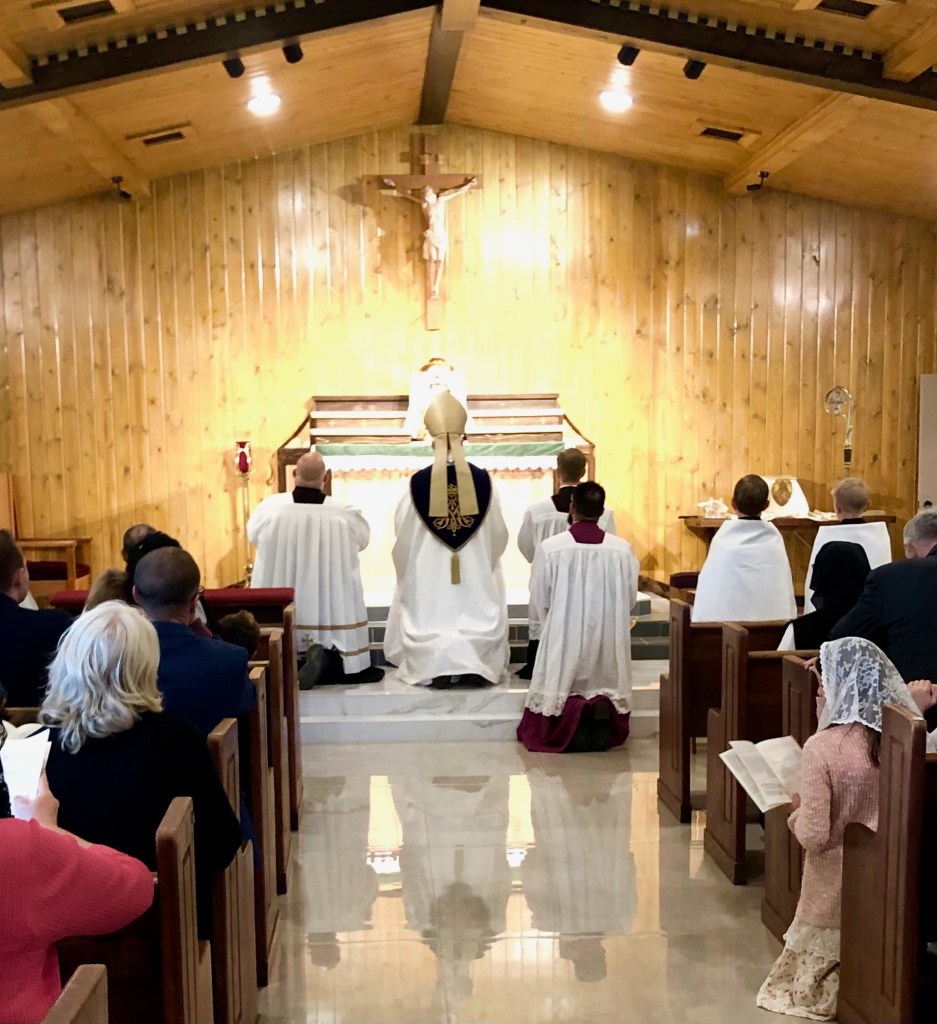
The Holy Family Chapel was completed last month, and the first Mass was celebrated on September 29, the feast of the Holy Archangels, with Bishop Strickland present. The chapel is small, to tide over the worshipping community until the magnificent Oratory on the Hill can be built, still some years in the future. The chapel seats around 50, with overflow seating for another 50. It’s a church-shaped building, constructed within a larger metal barn. It reminds me of the Holy House of Loreto, the tiny cottage where the Virgin Mary was said to have conceived of the Holy Spirit, which is now enclosed within a much larger basilica.
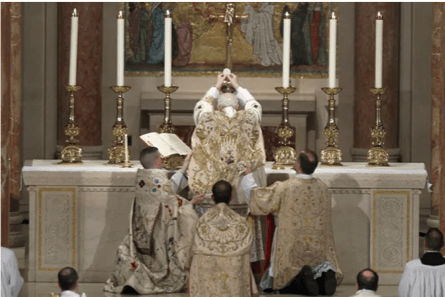
The Chapel is very much a “country church” with stained pine walls and aged wooden pews, with elegant highlights in the trim of the roof beams, the lovely fixtures reclaimed from older churches, and of course, the tabernacle of the Blessed Sacrament. It is a humble and amiable atmosphere in which to celebrate the Mass, including the Ordinariate Use of the Roman Rite.
The Ordinariate has captured my imagination. Ever since Pope Benedict’s expansion of the use of the Latin Mass in the 2007 Summorum Pontificum, and especially the constriction of it by Pope Francis in Traditionis Custodes of 2021, interest in the Latin Mass has blossomed. What is this rite by which nearly all our saints and ancestors were saved? What drove the process that changed it? Have we lost something we ought to preserve?
More and more people want to find out for themselves, but the Latin Mass can be intimidating for those who came of age after the 1960s. It is different, and requires a bit of orientation and practice to feel confident in its celebration.
The Ordinariate Rite is like a stepping stone to the Latin Mass. It is a beautiful liturgy with its own rich history, whose roots in the Catholic past have not been disturbed. I sometimes explain it to people as “the traditional Mass rendered in English.” The Fathers of the Pious House, who make their home at Veritatis, readily agreed to train and offer the Ordinariate. It is a new leaf in the folio of Catholic worship opportunities in east Texas.
Generically, “ordinariate” refers to an ecclesiastic organization led by someone other than the local bishop. When Anglicans began to embrace the Catholic Church in large numbers several decades ago, dialogue began between Pope Benedict and Anglican clergy. Whole Anglican congregations and dioceses wanted to become Catholic, without losing the rich patrimony of the Anglican church. They had preserved beautiful architecture, music and liturgy for their worship, and many could not bear that it be lost, to be replaced with stick-figure art, singsong music and modernistic architecture, the puerile aesthetic that had taken over many Catholic parish churches.
Then Pope Benedict issued the exhortation Anglicanorum Coetibusin 2009,which allowed for the full communion of Anglicans with Rome, while retaining their own hymns, art and liturgy. These formerly-Anglican congregations were known as “ordinariates” and their liturgy, as the Ordinariate Use.
The Anglican and Roman rites have a common ancestor, of course: the traditional Mass which was largely unchanged from the 3rd century until the 1960s. The Novus Ordo created some new things and jettisoned some old ones when it was promulgated in 1969, but of course, didn’t affect the Anglican Church at all. So the liturgy permitted to the Anglican Ordinariates, even after full communion with Rome, is essentially the Traditional Mass, rendered in English.
The Mass schedule of the Holy Family Chapel gives us ample opportunity to explore our heritage in the Mass, both in Latin and in English. The Ordinariate is celebrated on Sundays at 8:30 am. Other Masses available during the week are Sundays at 10:30 am, Monday – Friday at 12:05 pm, and Saturdays at 9:00 am.
The drive from the Cathedral in downtown Tyler to the Veritatis chapel is 25 minutes into beautiful rolling hills and stands of pine. When you’re there for Mass, take a look around at the vision-becoming-reality of the Veritatis project. Remind yourself that, with perseverance and God’s grace, even dreams that people scoff at, that stumble on obstacles, that seem too good to be true, can indeed be realized, bringing something new and fresh into our lives.
Holy Family Chapel
16711 County Road 356, Winona
The neighborhood at Veritatis Splendor is growing.
















 Truth for Souls