Signs

Signs Around Town

Since the Supreme Court decision on Dobbs, I’ve observed protestors on our Tyler public streets and parks half a dozen times, carrying threatening and blasphemous signs. My heart sinks; our mostly Christian, friendly little city, where you see “WE LOVE LIFE” lawn signs all around town, occupied by raging, shouting  women, glorying in their ability to offend.

The website http://www.wewontgoback.com posts the details of pro-abortion protests all over the country and includes downloadable poster designs, though the most disturbing signs I saw in Tyler were homemade ones, more horrific than these from the website. 

Signs have the power to rouse people, for good or ill.

Prayer on the Square

We hold signs, too, when we pray on the town square. Back on January 12, 2022, long before the abortion protests, a group of Catholic prayer warriors began meeting on Wednesday evenings in our city square to pray the rosary. We were acting in solidarity with Catholics in Austria, who had begun to pray for help against the tyrannical measures of their government, under the name “Austria Prays.” We held signs and flags, intended to help wake passersby up to the dangers bearing down on good people all over the world.

The Canadian Truckers’ Convoy was in full swing at that point, and we were eager to support them. They were perhaps the first globally-visible Freedom Fighters, though their efforts ended in apparent defeat. I say “apparent” because the government crackdown on peaceful protestors alerted us to the dangers of central banking when you hold opinions that differ from the government’s official narrative. Prime Minister Trudeau so casually ordered the bank accounts of truckers frozen, that the whole world saw how easy it would be for governments to manipulate a central banking system. For that forewarning alone, the whole Canadian truckers’ movement was worthwhile.

One of the founding couples of our Prayer on the Square arrived from Canada last year, and Martin proudly held the beautiful Maple Leaf flag in the early days, alongside the Stars and Stripes.

Life in little Tyler, Texas was pretty sedate all winter and spring, but we could see the global community rising up against the lies and over-reach of governments. We hoped that Americans would be energized by the Canadian patriots, to fight for freedom here, but Tyler was not feeling the pinch yet. 

When the American People’s Convoy launched on February 23 from California to Washington DC, we were super-enthused. We wished, rather than believed, that it would light a spark in the American people, but it was still not time. Enough people have to be alarmed and personally affected by tyranny before there will be a mass outcry.

So we keep praying, every Wednesday at 5:30, rain or shine. We’ve been meeting for seven months now, and we actually rather enjoy it. There is joy in praying the rosary together, we love the honks from passing cars, and we enjoy our fellowship over dinner afterwards. Since we pray on public sidewalks, we are not required to have a permit, but we’ve had one nevertheless, every week we’ve been out there. It puts us on solid ground with law enforcement, and alerts them to our presence. 

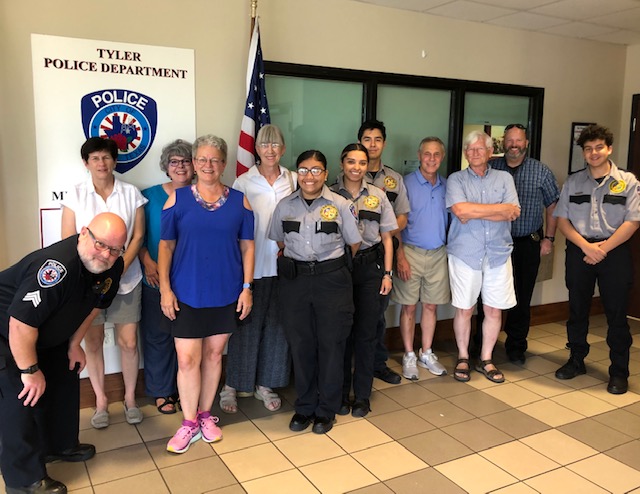
Once a month, we visit the nearby police station with pizza, cookies and other treats, to demonstrate our appreciation, and cultivate a relationship with police. They have our backs, as we saw when the abortion protestors marched in front of the Cathedral. We want them to know that we have theirs. 
Some of our signs could be considered “political,” but at this point, politics are over: there is only good and evil. Is it political to urge Americans to pay very close attention to their freedoms (including freedom to worship) as governments globally crack down? Is it political to point out the dangerous experimental shot that was forced on the world without ever receiving approval (and which still does not have approval,) but which has killed and disabled hundreds of thousands of victims?

Soon we will have a sign of solidarity with farmers worldwide, who are being put out of the food production business, thus setting up a worldwide famine. If Christians don’t stand up for such things, who will? It’s not politics; it’s solidarity.

In the Netherlands, farmers block a major highway with their tractors during a national protest. 

Frankly, I’m not sure God cares about what we call “politics”, but I think He cares a great deal about innocent people who are poisoned, killed or otherwise preyed upon by the arrogant and powerful. 

He has shown the strength of His arm; He has scattered the proud in their conceit.

He has cast down the mighty from their thrones and has lifted up the lowly.

God cares very much about the welfare of His little ones. Once we know what is being done to God’s people, we have to speak up.

Signs elicit responses. They plant seeds. They let people know they’re not alone in seeing that something very wrong is going on, and that there are people who care about it. The media attempts to maintain the fiction that everyone believes the approved narrative, thus gaslighting the population, but with every car that passes us and our signs, we challenge that notion. And when Tyler finally does feel the pinch that the global chessmasters have already set in motion, signs will let people know that we are a community ready to stand up for them.

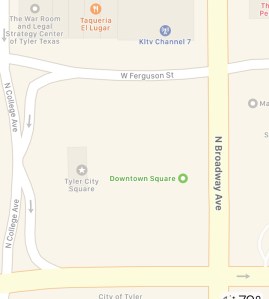
Join us and our signs and flags on the Tyler town square (Ferguson and Broadway), rain or shine, any Wednesday at 5:30 pm, to pray the Rosary for protection over our community, our country and our Church.  
No Place at the Table

A friend recently told me a story of darting frantically around the tables at her oldest son’s wedding reception, looking for a place. Seating had not been assigned, and couples had filled up the formal tables. Since she is a widow, finding a single empty chair was not easy. Eventually a happy accommodation was made, but imagine the indignity of being the mother of the groom with no place to sit at the wedding dinner. 

One of the most honored people at the banquet, with no place at the table. 

It reminds me of our bishop after he was so unceremoniously turned out of his diocese. At a time when he should be honored for his long service, pastoral kindness, and courageous warnings about the open firehose of evil… he was ripped away from his position and his flock, and flung out like the lowliest dishwasher.

One of the most highly esteemed men in the Church, with no place at the table. 

Now we have no bishop who joins us as part of our family, though we have functionaries who fulfill the administrative duties of a bishop. No one has descended to touch our grief or bind up the wounds that must be healed to restore this local church. It’s like nothing ever went amiss, and as any survivor of abuse can tell you, that is not the path to recovery.

Our bishop now travels, bringing the Gospel and hope to people throughout the country, and the world. The Catholic laity is so starved for someone in authority to preach Jesus Christ Crucified, that Strickland has been adopted by the millions who are left shepherd-less when their bishops refuse to stand up to the wolves. 

Our bishop is living the best life possible for an apostle of the Church without a see, but his calling is to be a shepherd. That implies a flock. Not an audience, but a flock. The modern Church has forgotten that there is a relationship between shepherds and their sheep. He knows the sheep, and the sheep know his voice. The place of a shepherd can’t be filled by an anonymity.

The laity is in danger without a shepherd. Those bishops who have spiritually abandoned their posts – and that is the great majority of them in Western society – have a stern accounting in their future. But that is no comfort to us now, as we confront the Culture of Death and Disorder on our own. We need our shepherd, the one who rebukes the wolves and fortifies the gates, not just one who signs decrees.

On Tuesday of Holy Week three years ago, the Firehouse moving van pulled away, leaving me and my household goods in Tyler, where I knew exactly no one. Disorienting as it was, I was looking forward to beginning the Triduum at the Cathedral, where I assumed the bishop I so admired would be preaching, so I could hear for myself whether he was all I’d gathered from a distance.

Two days later, on Holy Thursday evening, Bishop Strickland stood in the breezeway of the Cathedral, vested for Mass, and welcoming worshippers.  He shook my hand and wished me well, on his way to the next person, but I was happily stunned. All I wanted was to hear his words; I did not expect to meet the man. 

And his preaching did not disappoint. In his bilingual homily, he slipped from English to Spanish easily, with a Piney Woods twang in both, delivering a message he clearly felt with all his heart. His whole body practically vibrated with the force of his words. 

Holy Thursday has always been my favorite liturgy of the year. That first year in Tyler, it was packed with the hope that I might have finally come “home,” after so many years languishing in parishes with no spiritual leadership, more social clubs than churches, and not even very good ones, at that.  

Since then, our bishop has shown himself a true shepherd. He has gone to considerable trouble to attend our events and talk to all the laity gathered, even to the hundreds. He knows his sheep, and even more remarkably, he wants to know his sheep. Never have I seen a trace of that attitude we know so well from other clerics, the impatience at having to herd cats. Troublesome cats, needy cats.

Rivers don’t flow backward, so I have had little hope of our bishop being restored to us. Nevertheless, I have begun to pray that he will be. Only God knows the plans He has for Joseph Strickland, but since the removal was unjust and intemperate, I pray that the wrong may be righted. 

For our bishop to be treated badly in return for good service is maddening. But for Bishop Strickland, it is a share in the degradation of the Cross. By rights, he should occupy a high place; instead, he has no place. He is Simon the Cyrenean, shouldering the Cross with Jesus. Think of the comfort Our Lord draws from his obedient son suffering without complaint! To the extent I can prayerfully, willingly, patiently endure my own sadness and anger at the loss, I participate in a minor way. 

But, dear Lord, we do miss our bishop at the table.  As we celebrate the priesthood on Holy Thursday, we will have to face a cathedra with no seal. I can’t picture it without sorrow. This Holy Week, we have a true Via Dolorosa to offer in union with Christ.

May God make it fruitful.

A Letter to my Brother Priests

Posted on Bishop Strickland’s website on January 4, 2024

Please share with every Priest you know!

January 4, 2024

St. Elizabeth Ann Seton, Memorial 

My Dear Brother Priests,

As we begin 2024, let us pray that we enter this new year with great priestly fervor and with the Blessed Virgin Mary by our side. 

My previous letters have focused on us, as priests, becoming more and more deeply Marian. Now, I want to focus on what it means to be Eucharistic priests. First, I am compelled to emphasize the grave responsibility each of us carries to the altar of Jesus Christ when we celebrate Mass. Sadly, we have seen how devastating it is to the Bride of Christ when her priestly sons willfully live abusive and sinful lives. Priests who fail to authentically live Christ’s call to the priesthood and who lose their sense of repentance bring desecration to the sacred altar of Jesus Christ and wreak havoc on the Church. If we fail to respond to Christ’s call to holiness and to forsake any sin in our lives, the consequences for us and the people we serve are dire; therefore, we must double down on our efforts and use this time of crisis in the Church as an opportunity to grow even closer to Christ in the Eucharist and to experience a more profound conversion of heart. I believe the only truly effective way for us to respond to our human inclination toward sin is to seek a deeper Eucharistic piety.

Using the phrase “Eucharistic piety” may feel off-putting and overly spiritualized, but I believe our challenge as priests of the 21st Century demands that we seek holiness, real holiness. Although simplistic, I recommend striving to know Jesus Christ and His Sacred Heart more intimately. I am reminded of the eleven faithful Apostles in contrast to the unfaithful one, Judas Iscariot. The Gospels do not share the details of how each of the eleven came to truly know Christ in a profound way, but they do tell us about the time they spent with Him. The few times Judas is mentioned, it seems clear that he is preoccupied with the purse and not with learning at the feet of the Master. I suspect that if we had the chance to speak with apostles Peter, James, John, Andrew or any of the others, they would share wonderful, never-recorded stories about their quality time with Jesus. As His 21st Century priests, we are called to continually deepen our relationship with Him and, as with any relationship, it will require effort and selflessly spending quality time in His Presence in Eucharistic Adoration. 

Ultimately, we must be men of self-sacrifice to become truly Eucharistic priests. We must be men of real, day-to-day, draining and exhausting sacrifice. We must be willing to confront false messages no matter their origin – whether from the secular world or the Church. Most importantly, we must be willing to place our lives on His altar and to join Him in the most profound sacrifice of love the world has ever known.  

In closing, I believe we can agree that, as priests, we have made the commitment to love, honor, and cherish the Church. This is a difficult task, and we often fail, but I can think of no better person to emulate than the beloved disciple, St. John. He was at the Last Supper where wine becomes Christ’s Precious Blood, and with Eucharistic piety, John remained with Christ at the foot of the Cross where he was spattered with Christ’s Precious Blood as He died. Like John, this is also where we must be, intimately sharing in Our Lord’s Precious Blood as we offer His Body and Blood, Soul and Divinity to the world. 

Brothers, let us pray for each other that we may always authentically and humbly approach Our Lord in Eucharistic Adoration and at His altar each time we celebrate Holy Mass. 

St. John the Evangelist, pray for us. 

Bishop Joseph E. Strickland 


Joseph Strickland

Bishop Joseph E. Strickland was named the fourth bishop of Tyler in September of 2012 by Pope Benedict XVI. Prior to being named bishop, he served a number of roles in the diocese, including vicar general, judicial vicar, and pastor of the Cathedral parish. He was ordained to the priesthood in 1985.

A Letter to my Brother Priests

Posted on Bishop Strickland’s Website on December 21, 2023

Please share with every Priest you know!

Saint Peter Canisius, Priest and Doctor of the Church 

My Dear Brother Priests,

I pray that the last few remaining days of Advent are full of blessings as you transition from the joyful season of Advent to the glorious season of Christmas.  Having been a pastor for many years, I know all too well the challenges you and the faithful will experience as you make the quick change from Advent to Christmas in the space of a few hours. It can be dizzying, but I always found it uplifting to see the same faithful souls return for another liturgy, and I enjoyed laughing with them as we all wondered, “now, which liturgical celebration are we here for this time?” Although the 4th week of Advent 2023 will be very short, let us pray that we are still prepared for the Nativity of the Lord.

In my previous letter, I made a plea to all priests to become Marian priests, but I suspect we each have different ideas about how to become a Marian priest, and many probably wonder what this means for our priestly journey. First, I believe it means that we must intentionally invite and include Mary in our daily journey so that we can eventually come to fully understand our role as priests. Our Lord understood the importance of His Mother’s constant presence in His life, and He shares the gift of her presence with us. Scripture makes this very clear. As Jesus spoke from His Cross to Mary and the beloved disciple, John, He speaks to us, His ordained priests. We are to dedicate our lives to serving others with His Mother by our side. Her role in our priestly lives opens a rich dimension of what it means to be a priest of Jesus Christ.

Additionally, a Marian priest must be aware of Mary’s presence at the altar when offering the sacrifice of the Mass. She was present when He breathed His last breath as He died on the cross,and she is with us every time the Mass is celebrated. Our Marian focus, as priests, helps us to stay connected to the supernatural truth we celebrate at the sacrificial altar of Jesus Christ. With her help, we can overcome the challenge of losing the sense of the sacred and the supernatural.  

Lastly, priests who have a Marian focus are drawn closer to Christ, and as priests, the closer the better, for it is Christ who teaches us the true meaning of our priesthood. Priests sacrifice themselves and cling to the Church in service to God’s people, much like spouses sacrifice themselves and cling to each other for the good of the other. Our work is directed towards the salvation of souls. I must admit my focus, over the years, has not always been clear, but as my personal devotion to Mary has developed, the greatest blessings have been a heightened awareness of her presence at the altar and a more profound humility in the Real Presence of Jesus Christ – Body, Blood, Soul, and Divinity. I believe seeking to be Marian priests is simply entering more deeply into what our priesthood truly means.  

My dear brothers, as we go forward, may we rest in Our Mother who is the advocate of priests.  She will hold us close, and she will adopt us as her sons, as she did St. John.  She will draw usinto the radiance of her Son and there, by the intercession of Our Mother’s Sorrowful and Immaculate Heart, we will be a consoler of Christ’s Sacred Heart.  As we His priests, in His presence, offer adoration and reparation for His Bride, the Church, there will be a renewal of holiness within our own lives and within His Church.  

Mary, Mother of God, pray for us, your priestly sons.

Bishop Joseph E. Strickland


Joseph Strickland

Bishop Joseph E. Strickland was named the fourth bishop of Tyler in September of 2012 by Pope Benedict XVI. Prior to being named bishop, he served a number of roles in the diocese, including vicar general, judicial vicar, and pastor of the Cathedral parish. He was ordained to the priesthood in 1985.

Shifted on The Shift

When I came out of the theatre after watching The Shift, I was only thinking one word: refund. Not so much the ticket price, but the two hours. 

By the next morning, I’d completely changed my mind. Talk about a shift. This is a movie that sticks with you. I must say, I like a movie that doesn’t give you all it has on the first date. You have to probe, you have to ponder. Probably no one was still thinking about the levels of meaning in Barbie the day after they saw it. But The Shift will continue to work in your mind, and reveal more of itself the longer you think about it. 

First of all, the movie is an allegory. Taking it literally will rob you of some of the meaning. For example, the whole idea of lives actually being lived in multiple universes at once is profoundly un-Christian. Every human is a body-person, and the life of any particular person is in that one body; it can’t be parsed. The Incarnation guarantees this integrity. 

So how can a movie conceived and produced by a Christian studio feature multiple bodies in multiple universes? The answer is that it’s an allegory, and a rich one. Each alternate universe is a picture of the world we create when we sin. As many different sins as there are, that’s how many universes could be posited. And they’re all dreary, dangerous and dull. That’s a worthy lesson about the effects of sin.

The alternate “sin world” in the movie was a perfect portrayal of the world globalists are trying to create for us: starving, demoralized people who will do nearly anything to escape the hell of daily life, including a media experience that mimics the Metaverse; storm-trooper police with reflective face shields that completely hide any semblance of humanity; crime, filth, oppression and poverty. Bibles are outlawed, as well as any mention of God. People can be arrested or shot for anything or nothing.

The potential familiarity of that hell-world was the main reason I practically ran out of the theater when the movie ended; it hit just a little too close to home, and scared me in its plausibility. Was it intentional that the world created by sin looks very much like Democrat-run inner cities?

When the movie begins, that dark world is not yet visible. The protagonist, Kevin, a man deeply in love with his wife, is targeted by The Benefactor, a slick, well-groomed man in an expensive suit whom we soon realize is the devil. The Benefactor sees qualities in Kevin that he’d like to use in his mission, but Kevin, who is at least a casual Christian, knows enough to pray when the devil is pounding at him. His prayer infuriates The Benefactor, who seems to thus be defeated, but nevertheless, Kevin is transported to that dark world of bleak hellishness that looks like an inner city in a dystopian America. (It was filmed in Birmingham, Alabama, which is, in fact, a Democrat-controlled city.)

I had to visit that scene over and over again to make sense of it. If Kevin did the right thing (pray to God) with enough fervor to anger the devil, then why is he in hell for the rest of the movie? I didn’t figure it out until the next day, because it didn’t involve sin the way I normally think of it. Kevin didn’t lie, steal, murder or commit adultery. He was a good man, a kind man. The sin he committed was subtle. 

The sin is disregard, something we all do every day. We disregard the distress of the unborn, the trafficked, the unjustly imprisoned, even members of our own families. We do it to survive mentally, to be able to go to work the next day, to function in our daily lives. We do it because we don’t believe we can survive the pain that is all around us. But what if that disregard is enough to create a hell we can’t escape?

In Kevin’s case, it was, and it shifted him to a world of emptiness and pain. No matter how many times he gave his meager food to others, or risked his life to write down half-remembered Scripture verses, no matter how many good works, he was still in hell. But he retained his humanity because of his stubborn love for his wife, and his desperate attempts to find a way back to her. Love saved him long enough that he could finally make a choice, in extremis, to undo the harm he’d originally caused. Love gave him the chance for redemption.

The dark world that Kevin is trapped in, the one that looks like where we are headed if we don’t do something quickly, is the hell we build with selfishness. The Benefactor says that clearly, in case we missed it: all sin is selfishness. We are trapped in hell until we finally make a heroic gift of ourselves to another. Perhaps the serial hells are what it takes for some of us (me) to finally be so sick of selfish choices that sacrificial love looks like the obvious and joyful way out. 

In the climactic scene, The Benefactor and Kevin word-wrestle about God and the absence of God in that dark world where Kevin is trapped. The Benefactor taunts him: why doesn’t God come? Why doesn’t God answer? It’s the classic problem of evil: where is God? 

And like any serious philosophical reflection on that question, there’s not a direct answer. God, like The Shift, and like the Book of Job which it resembles, is not an easily wrapped-up sermon in a box. Our journey to Him is hard-fought, dangerous, as if in a fog, with the outcome not certain or guaranteed. It’s a walk of fear and trembling. 

If you watch this movie, settle in for the long game. Don’t expect to love it at first sight. Let it work on you. 

Cinematic detailers will recognize Paras Patel and Elizabeth Tabish (Matthew and Mary Magdalene from The Chosen) and Sean Astin (Samwise Gamgee from The Lord of the Rings.) If you watch closely, you’ll also pick out Jordan Walker Ross (Little James from The Chosen) in a crowd scene. Neal McDonough, who plays The Benefactor, is one of the best “bad guy” character actors in the business. 

As of today, December 8, The Shift continues in theaters. It will be available on the Angel Studios app and website after its theatrical run. The production budget was $6 million, which was already recovered in the first week box office receipts. It’s rated PG and scores 87% with audiences on Rotten Tomatoes. 

To find a theater near you, watch the trailer and buy tickets, visit: https://www.angel.com/movies/the-shift

A Letter to my Brother Priests

Posted on Bishop Strickland’s web site on December 8th, 2023

Please share with every Priest you know!

Feast of the Immaculate Conception

My Dear Priestly Brothers,

As we begin a new liturgical year, I am compelled to reach out to as many of you as possible with a simple but profound request – to join me in an important renewal of our priestly lives. I urge you to share this letter with every brother priest you can, even if it means translating it into another language. My hope is that Catholic priests around the world have an opportunity to join me in this renewal.

You may ask, “Who are you to send such an audacious message along with the claim that it should be embraced by every priest in the Catholic Church?” I am simply a priest and bishop who is devoted to our Blessed Mother and her Son, Jesus Christ, and it is through this devotion that I implore you to develop an ever-deepening life in Our Mother and Our Lord. Allow our Mother Mary, who gives us the grace to come unto Him, to lead you to her Son in adoration. There, you will be showered by the light of His Eucharistic Face which will lead you straight to His Eucharistic Heart and, there too, you will be accompanied by His Mother and her Immaculate Heart.

I believe it is time that we become deeply Eucharistic and Marian priests, and that we set aside all the squabbles, confusion and temptations to shape Christ’s Bride according to the world’s will rather than the Will of God. I am reminded of the dream of St. John Bosco in which he sees the Barque of St. Peter in desperate condition with her only hope being a strong tether to the pillar of our Eucharistic Lord, and an equally strong tether to the pillar of His Mother and Our Mother, the Immaculate Virgin Mary. I encourage you to read St. John Bosco’s vision of the two pillars; it speaks of our time.

Brothers, my message is not about another program or some sweeping reform; it is about every priestly heart coming to know the Sacred Heart of Jesus in a transformative way, and the best way to His Sacred Heart is through His Mother’s Immaculate Heart.

While the call to renewal is not complicated nor sophisticated, it will require each of us to lay down our lives for our Lord, who laid down His life for us. Should a priestly brother balk at the call – pray for him, nudge him, implore him to become a Eucharistic and Marian priest.

I hope my heart will speak to your hearts so that we might move, together, ever closer to His Heart, the Sacred Heart of Our Lord Jesus Christ. It is there we find Truth.

Let us fall to our knees and pray, asking the Lord to guide us to a renewal of His Bride through His priests.

Bishop Emeritus Joseph E. Strickland


Joseph Strickland

Bishop Joseph E. Strickland was named the fourth bishop of Tyler in September of 2012 by Pope Benedict XVI. Prior to being named bishop, he served a number of roles in the diocese, including vicar general, judicial vicar, and pastor of the Cathedral parish. He was ordained to the priesthood in 1985.

The Legacy of Bishop Strickland

It’s been a few weeks since our good bishop was taken and we are continuing to suffer “firsts.” The first Friday he was not there for Friday morning Mass and adoration, when the cathedra had already been stripped of his coat of arms and looked like it had been vandalized… that was hard.  

Tomorrow is the first monthly potluck breakfast since Bishop Strickland was taken. The First Friday potluck began when Fr. Joe was pastor, but it faltered during covid. Celeste relaunched it in the Bishop’s honor last year. Tomorrow he will not be there to bless the food, move around from table to table, talking to everyone and making us laugh.  

And the biggest and hardest first is still to come, when another bishop is assigned.  

It’s inevitable that we all thought, even if just for a moment, “What’s keeping me in Tyler if the Bishop is gone?” We moved here for the Bishop, or rather, for the way the Bishop held up Christ clearly and without making our glorious Faith subservient to political nonsense. So are we staying or going?  

We’ve drawn closer to each other, more like family as we weather this storm together. If community was rated on a scale of 1 to 10, we just skipped right over a few levels, gunning for a 10. Even that is hard, though. There’s a part of me that doesn’t want to get through this with grace, doesn’t want to find the good, as though it is somehow disloyal to the bishop to soldier on. If we can get along without him, does that somehow mean that he wasn’t vital to us? I felt the same way after my father died, not wanting to admit that my world could go on without him. 

And yet, we have to honor the Bishop by trying to be as good at what we do as Bishop Strickland is at what he does. That’s why we’ve loved him: he set an example for us, showing us how to be the kind of Catholics we want to be: bold and brave and true. Indeed, if we don’t take this adversity as a spur to grow in virtue and prayer and joy, we dishonor the Bishop.  

Perhaps there are some factions happier now that the Bishop is gone from Tyler. We can’t change that, but we can demonstrate what a difference a good bishop makes. Somehow in this time when up is down and good is evil, the witness of one humble bishop who won’t give up, has become something extraordinary. Anyone should be able to look at the laity of Tyler and see the reflection of our extraordinary bishop in us.  

The three things I think are most critical to his legacy (and it is purely coincidental that they are A, B and C) are adoration, believing the best, and courage.  

Adoration. In every diocese I’ve lived in before, Eucharistic Adoration was, at least publicly, a devotion of the laity. Rarely did I see a priest in adoration, except on Holy Thursday. When I did see a cleric in an Adoration chapel or at a Holy Hour, it was strangely exciting, like “Look! Our pastors are with us, we are not alone before the Lord!” It gave us assurance that our priests were Eucharistic, rather than worldly. Some priests have private chapels in their residences where they adore Jesus in seclusion, away from the eyes of the laity, but if they knew how significant it is to us, they might come to the public adoration chapels more often. Seeing a priest in adoration binds the laity to the priests in a completely unique way.  

We watched Bishop Strickland in Adoration every week before Friday morning Mass, and at many events and conferences. It is likely the supernatural source of our fierce loyalty to him. Yes, we like how friendly and approachable he is, we admire his forthrightness and willingness to suffer blows for the truth, but perhaps what binds us most powerfully to him is that he led us in Adoration; we came before God like an arrowhead, with the Bishop at the point. To watch him kneel on hard marble for an hour without flinching was to cowboy up and quit making excuses.  

The Bishop has his own Eucharistic chapel in his home, and had one in the Chancery office as well, but his willingness to humble himself before Jesus in front of us and as one of us, has reinvigorated my Eucharistic devotion. I’m named for a Eucharistic saint (Clare) and it was the Eucharist which brought me home to the Catholic Church; my adult life has been formed around the Eucharist. And yet, watching the bishop kneel before the Lord shakes me as though I’m encountering the Eucharist for the first time. It’s a heartrending picture of the Body of Christ. 

Bishop Strickland brought a “tiny adoration” into each celebration of the Mass, at the elevation of the consecrated Host. He stood for long moments in adoration, and implicitly invited us into adoration by drawing out the moment. People attending Mass with the Bishop for the first time would always remark on that, and I never stopped being moved by it. The elevation was often so prolonged that a person could lose himself in the contemplation of Christ and forget where he was. This was one of the great gifts of attending Mass with our good bishop. 

Believing the Best. Some people have criticized our bishop as being naïve. But I think it’s actually his willingness to believe the best about other people that is interpreted as naivete. He notably refuses to take offense at slights or even outright attacks, using humor and self-effacement to deflect anger.

The bishop’s openness to the potential holiness of every person colors his interactions, even on Twitter, where nastiness makes its home in the Comments sections. If you persistently see Christ in others, it’s impossible to demean or dismiss them. Mother Teresa notably practiced this attitude, and the Bishop is getting quite a good workout at it himself. 

You only have to watch the video of his remarks at the USCCB meeting in November 2018 to see what I’m talking about. He was clearly correct to bring up the elephant in the room (homosexuality at the heart of the abuse scandals) and clearly the bishops were aligned to do nothing about it, and yet the Bishop’s manner is open and you can see he still believes the bishops can do the right thing.  

 I have noticed a laissez-faire attitude on the part of the bishop, a willingness to let things take their course, with respect for the rights and duties of laypeople. I’m familiar with several situations in which laypeople disagreed, and went to the bishop for support of one side or the other. While the bishop might be willing to share his opinion on some matters, he respected the lay people enough to allow them to come to their own decisions about affairs proper to the laity. In this way, he forced us to mature in our thinking and charity as adult Christians in community. He would not play the autocratic father who settles every squabble for the children. He believed the best of us, and expected us to take up our duties as baptized Christians.  

The bishop is without guile, like Nathanael, but he’s no simpleton. He is, in fact, quite astute, the result of much reading and study taken into prayer. When Bishop Strickland infamously tweeted, “I believe Pope Francis is the Pope, but it is time for me to say that I reject his program of undermining the Deposit of Faith,” the phrasing indicated a process of thinking and considering. It was not said impetuously. His words, “it is time” show that he’d been wrestling with it for who knows how long, attempting, as we all have, to believe the best about the Pope. And then he couldn’t. That’s when courage came into play. 

Courage. Does anyone really believe that May 12 tweet was casual on the part of the Bishop, that it didn’t cost him dearly in his soul? It is in the deepest part of the Catholic heart to love and honor the successor of Peter, the vicar of Christ on earth. It’s not in our Catholic nature to not love the Pope. This pope has done violence to our souls by forcing us to admit that there is something desperately wrong in Rome. 

I believe Bishop Strickland knew the price he would pay for saying what he did, and had already accepted it before his fingers ever hit the keyboard. That is courage.  It may be the thing we most admire about the Bishop, perhaps because it is the hardest to emulate. What do we stand to lose that compares to what the Bishop lost for the sake of truth? Where does our duty lie? We are all called to discern our proper place in the fight for Truth. The Bishop has gone ahead of us. 

There will be a cost to speaking the Truth. We are already beginning to pay, with the loss of the Bishop, but we’re still early days. The Bishop is only part of the plan for which God brought us to Tyler. Courage will be demanded of us as we hold up the truth of Jesus Christ and His Church. This diocese, and indeed the world, is not going to fall back to some standard of normal without a crisis point. The fight is not going to pass us by. We must defend our Faith with the knowledge that there will be a cost, and we must have prayed our way to acceptance, the way Bishop Strickland did.  

The Bishop could do nothing other than to hold up the truth of Christ, which is for the good of the sheep. We must now conduct ourselves as worthy of the price. We must be as open and approachable as our good bishop, believing the best of others, pressing ourselves to adore the Eucharist at every opportunity, and speaking the truth with courage and love. 

We are the legacy of Bishop Strickland in Tyler, Texas. Let’s make it shine.  

All the best insights about moving forward come from the kind witness of Fr. Steven Chabarria.

Novena for Bishop Strickland Begins Today!

November 13 through November 21, 2023

We begin today to pray for Bishop Strickland.
In his humility and obedience, he leaves his position as Bishop of Tyler.

We also pray for all the bishops of the United States as they gather on November 13 – 17, 2023 at the USCCB Plenary Assembly.

The Catholic Faithful in Tyler Texas have been doing Novenas for Bishop Strickland regularly for the last couple of years. Join us from wherever you are to pray for America’s Bishop!

SIGN UP BELOW TO RECEIVE DAILY NOVENA REMINDERS

Day 1

November 13th

Novena to
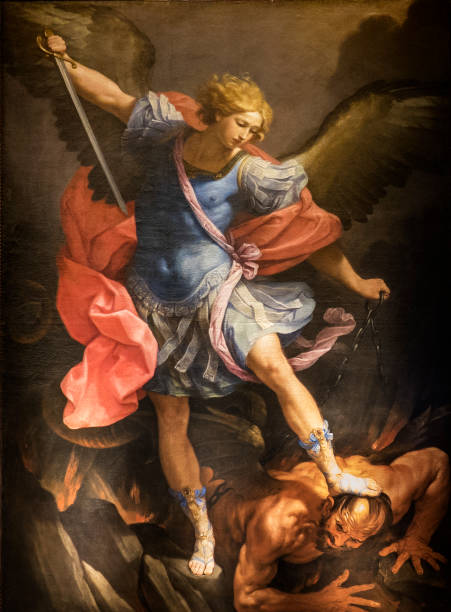
St.  Michael
the Archangel 

In the name of the Father, and of the Son, and of the Holy Spirit. Amen.

St. Michael the Archangel, I honor you as a powerful protector of the Church and guardian of my soul. Inspire me with your humility, courage and strength that I may reject sin and perfect my love for our Heavenly Father.

In your strength and humility, slay the evil and pride in my heart so that nothing will keep me from God.

St. Michael the Archangel, pray that I may be blessed by God with the zeal to live my life in accordance with Christ’s teachings.

St. Michael the Archangel, you are the prince of angels but in your humility you recognized that God is God and you are but His servant. Unlike satan, you were not overcome with pride but were steadfast in humility. Pray that I will have this same humility.

It is in the spirit of that humility that I ask for your intercession for Bishop Joseph Strickland.  I pray for you to accompany and protect him as he lives out  the mission given to him by God and the Church. 

May Bishop be surrounded by all the Holy Angels. May they tend to him during this time of great loss. May they inspire, protect and strengthen him as he finds his way without his beloved Diocese of Tyler.   

I pray for our Blessed Mother to comfort Bishop in this time of uncertainty. May she continue to assist him as he seeks the Will of God and continues to defend the true faith.

May a fire of love burn in the hearts of all the bishops of our country. May their hearts  be ignited by the Holy Spirit and purified. May they be consumed with a burning desire to live only for Christ and fulfill their God given Apostolic mission. 

May the bishops of our country be given the same courage as the first apostles were given; a willingness to lose everything for love of Jesus. May they even be willing to lose their lives to defend the Truth as handed down to them through the ages. 

(Add your own intentions)

With grateful hearts, we thank you St Michael.  

“Saint Michael the Archangel, defend us in battle, be our protection against the wickedness and snares of the devil. May God rebuke him, we humbly pray; and do thou, O Prince of the Heavenly host, by the power of God, cast into hell satan and all the evil spirits who prowl about the world seeking the ruin of souls.”

Amen.

Immaculate Heart of Mary,  pray for us.

Sacred Heart of Jesus,  have mercy on us. 
Sacred heart of Jesus,  have mercy on us. 
Sacred Heart of Jesus,  have mercy on us.  

In the name of the Father, and of the Son, and of the Holy Spirit

Reminders by Text:

We have created a group on Signal to send reminders by text. You must have the Signal App to receive these reminders. Follow the link(s) below to select this option.

Already have Signal: Click Here To Join The Group

Need to get Signal: Click Here To Get The Signal App

Reminders by Email:

We send email reminders via a daily post during the nine days of the Novena. You can unsubscribe any time.

To sign up to receive email reminders: Click Here

Our Particularly American Civil War

Why is the Civil War the most interesting period in American history? Why has a book like Gone With The Wind been translated into dozens of languages around the world (including Korean, where it comes already loaded onto new tablets)? Why are Civil War battles re-created all over the country, with re-enactors investing thousands of dollars in their kit? Why do millions of tourists visit Gettysburg, and why is that battlefield featured in movies like Remember the Titans as a turning point in the lives of those who come? 

The Civil War is ours, for one thing. We didn’t fight it in Europe or the Pacific, but in Richmond and Atlanta and around Washington DC; New Orleans, Baltimore and Nashville. It was fought in the towns, woods, swamps, prairies, rivers, churchyards and neighborhoods of America, our homeland.

As a thought exercise, imagine war breaking out in the United States today. It would likely be about personal liberties, the power of the Federal government, the Constitution’s primacy, the berserker sexual activists and traffickers, and abortion. In other words, it might be ignited by any number of issues, but eventually it would come down to the meaning of life, and its protection. 

In the 1850s, there were tensions about the rights of states, equity in Congress, sectional tariffs and imports, and slavery. After a few years of war scoured away the details, it became a more single-minded war for the abolition of slavery. One could say that the Civil War came down to the meaning of life, and its protection. 

The primary lessons I draw from the War are these: nothing less than the meaning of life is worth a war, as it costs more than one can possibly imagine in peacetime; extraordinary leadership is required to make effective the sacrifices of soldiers; and moral authority is absolutely necessary to prevail over a stronger enemy. 

The Cost

In the 1850s, Americans weren’t thinking, “We’re living in the run-up to a war that will destroy us for generations to come.” There were sectional conflicts, journalists fanning the flames, and speculators eyeing the profit potential of war, like today, but most people were engaged in their daily pursuits, hoping the conflicts could be settled reasonably. Without the agitation of social media, you’d think there’d have been a better chance of peaceful resolution, but whenever influencers manipulate emotions, civil war can be lurking. If the issues concern your livelihood, your family, or your religious convictions, the kindling is dry. 

The caning of Charles Sumner on the Senate floor in 1856 is a perfect picture of the descent into chaos. Sumner, a Republican from Massachusetts, had given a violently angry speech in the Senate, lasting two days, calling his enemies things like “drunken spew and vomit.” And then he got nasty. Senator Stephen Douglas remarked quietly, “That damn fool is going to get himself killed by some other damn fool,” and that was nearly the case. 

Representative Preston Brooks of South Carolina entered the Senate chamber and issued a sort of a medieval challenge: you’ve slandered my countrymen, and honor demands a reprisal. He then struck Sumner over and over with a gold-tipped cane to the point of unconsciousness. Sumner suffered injuries that lasted for years. Brooks was fined $300, re-elected to his seat, and received canes from appreciative supporters all over the South, which enraged the North possibly more than the actual incident.

It would be several more years before the first shots were fired, but in retrospect, it was clear that the conflict had moved from philosophies to passions, from the oratory to the boxing pit. More and more people were starting to anticipate war, even desire it, as a way to redress grievances that weren’t being otherwise resolved. 

Once the shooting started in 1861, the veil was torn. Actual war far exceeded anyone’s expectations of the human cost. In 1861, as the first full battle was shaping up at Bull Run, near Manassas Junction, Virginia, Washington’s elites rode out in buggies with picnic hampers to watch the match. Women with their parasols, men with their cigars, were not expecting to see entrails and severed limbs. It was meant to be an afternoon’s thrilling entertainment, capped off by the spectacle of upstart Rebel soldiers fleeing at first glance of the imposing Federal army. There was a grave awakening that day, as the Rebels stood their ground and fired back rather insistently, causing the buggies to careen back to the city. 

It was a nasty surprise to the Southerners, too, though they held the field that day. They had similar illusions of a war easily won against a sissified opponent. In one of the opening scenes of Gone With The Wind, a young man from Georgia boasts, “Everyone knows one Southerner can whip ten Yankees!” That sentiment was widespread, even used to bolster Southern soldiers before battle, according to an eyewitness at Bull Run. 

Bold words took a mortal hit in that first battle. There were 4,500 casualties at Bull Run, which shocked both armies and civilians. No one yet realized that future battles would dwarf that, in numbers of killed, wounded and missing men. The horror to come was like a hurricane forming in the Atlantic, spinning ashore with a punch no one expects. 

Battle of Antietam, Antietam National Cemetery

Leadership

What kept the war going as long as it did was probably leadership. Both North and South had skilled, courageous, persevering soldiers, but they could not have effectively deployed their strengths without good leadership. You may have citizens itching for war, eager to fight a clear evil, but without fine leadership, that passion can’t be productively mobilized on a grand scale. 

Everyone knows the names of great Civil War leaders, even if they don’t know exactly what they did: Robert E. Lee, Stonewall Jackson, Ulysses S. Grant, and William Tecumseh Sherman, in addition to many lesser-knowns who performed magnificently. 

The South, with far fewer resources, and a smaller population pool to draw from, nevertheless performed well at the beginning of the war, quite likely due to superior leadership. Thomas “Stonewall” Jackson was a standout from the very first battle, where he gained his nickname from his stern refusal to back down when others fled in confusion.

Robert E. Lee didn’t command an army until a year into the war, but his presence was mightily evident once he did. His unconventional battle plans that triumphed by sheer audacity made him a symbol of canny genius and sober courage. Faith in his leadership kept the Southern armies in the field long after ultimate defeat had become inevitable. Even as he negotiated the surrender at Appomattox Courthouse, his starving, barefoot men pledged to fight on, if he wished it. 

The Union armies, in contrast, were plagued by poor leadership in the first few years of the war. President Lincoln initiated five changes of military leadership before giving overall command of the US Armies to General Grant in 1864. Northern soldiers, bitter that their sacrifices in battle kept being undone by the bad decisions of their leaders, were eager to exact retribution from the South. General Sherman’s troops pillaged Georgia and South Carolina, under orders to demoralize and impoverish the civilian South, to cripple their will to fight. Though Grant was called “the Butcher” in the press, for feeding men into battles to overwhelm the enemy with sheer numbers of bodies, he produced victory after victory, proving to be a leader worthy of his men.   

Moral Authority

Starting a war is somewhat easy; it takes the sustained inflammation of emotions and an outraged sense of justice, hopelessness, and a perceived threat to one’s family. To carry on a war, though, over a long period of time when the casualty lists grow longer, a people must hold moral authority. You have to know that the cause you’re fighting and suffering for is just, and that God fights with you. 

Both sides in the Civil War were initially convinced of God’s favor, but when opposite principles face off, God can only be found on one side, the side of Truth. For the early years of the war, when Northern soldiers were being poorly used by their leaders, their endurance was fortified by the sense of being on the side of right. By the time the war reached the long, sad slugfest of 1864-5, the Union was well convinced of the morality of their cause. While the determination of the South had not flagged, the supernatural power that accompanies God’s overarching will was absent. 

The Civil War proved that secession is possible, and even Constitutionally defensible. Secession itself is a non-violent act; it’s like leaving a party when the drinking gets out of hand. But once the Federal government acted to forcibly retrieve the seceding states, they had to build from scratch an army, navy, communication system, currency, constitution and law. States that remained bound to the Federal government had those institutions already in place. With such a disadvantage, a seceding state had best be on the side of Truth.

Given the evil rampaging through the world right now, searing a jagged path straight through marriage and the family, with every sign of accelerating, there will be a fight. Evil does not retreat, unless it is to give its opponents time to grow complacent before the next onslaught. It would be prudent for us to plumb the wisdom that our particularly American Civil War left us, as we contemplate what is to be done. The meaning and protection of life is at stake, and the kindling is dry. 

The Nativity of Mary Novena for Bishop Strickland

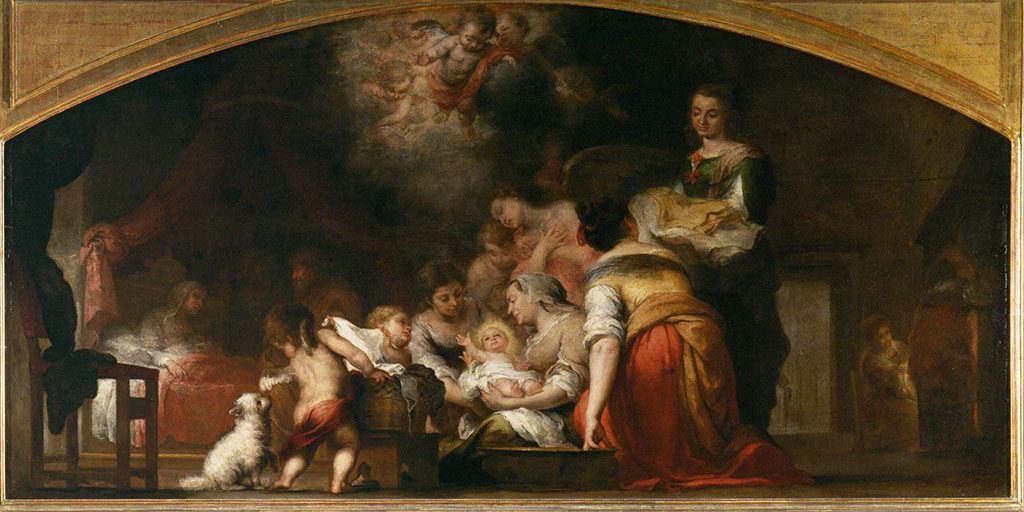
Beginning on Wednesday August 30th, 2023

Join the faithful of the Diocese of Tyler and become a Prayer Warrior for our Good Shepherd, Bishop Joseph Strickland. Our prayer intentions will be offered at the tomb of Bishop Fulton Sheen in Peoria IL. Let’s unite to pray and show our love and support for Bishop Strickland, Defender or The Catholic Faith!

“Please assure all those who join in this Novena that I will offer Mass for them.”

~ Bishop Joseph Strickland~

SIGN UP BELOW TO RECEIVE DAILY NOVENA REMINDERS

Reminders by Text:

We have created a group on Signal to send reminders by text. You must have the Signal App to receive these reminders. Follow the link(s) below to select this option.

Already have Signal: Click Here To Join The Group

Need to get Signal: Click Here To Get The Signal App

Let us begin, In the name of the Father, and of the Son, and of the Holy Spirit. Amen.

Vouchsafe that I may praise thee, O sacred Virgin and ask of you the following; give Bishop Strickland strength against his enemies, and against the enemy of the whole human race. Give him strength humbly to pray to thee. Give Bishop strength to praise thee in prayer with all his powers, through the merits of thy most sacred nativity, which for the entire Christian world was a birth of joy, the hope and solace of its life. 

When thou were born, O most holy Virgin, then was the world made light. Happy is thy stock, holy thy root, and blessed thy fruit, for thou alone as a virgin, filled with the Holy Spirit, did merit to conceive thy God, as a virgin to bear Thy God, as a virgin to bring Him forth, and after His birth to remain a virgin. 

Have mercy therefore upon me a sinner, and give me aid, O Lady, so that just as thy nativity, glorious from the seed of Abraham, sprung from the tribe of Juda, illustrious from the stock of David, didst announce joy to the entire world, so may it fill me with true joy and cleanse me from every sin. 

Pray for me, O Virgin most prudent, that the gladsome joys of thy most helpful nativity may put a cloak over all my sins. O holy Mother of God, flowering as the lily, pray to thy sweet Son for me, a wretched sinner and for my dear Bishop Strickland your faithful priest son.

Amen

We pray for the intentions of  Bishop Strickland: 

  • The Sanctity of Life from conception to natural death.
  • The Sanctity of Marriage as God established it between one man and one woman for life and being open to children.
  • The sanctity of the human person created male and female.
  • The sanctity of the Church as the Bride of Christ.
  • The sacred role of bishops as successors of the apostles and guardians of the deposit of faith.

  Our Father…  Hail Mary… Glory Be…